
My favourite frameworks, philosophies and principles, in my favourite medium for thinking.
Systems Thinking
Systems Thinking
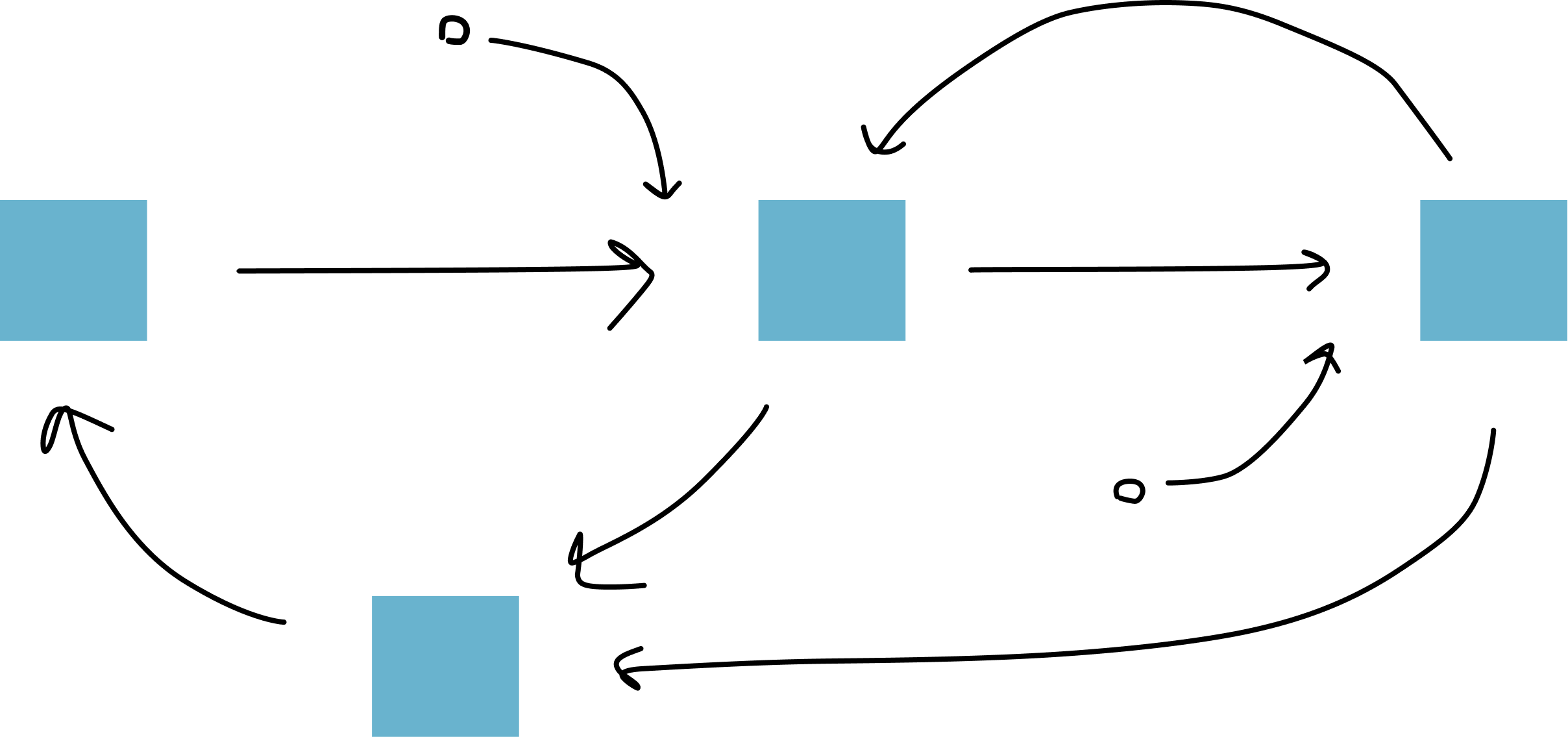
Complex problems are fun to solve. Systems thinking, which models how interconnected elements affect each other, helps me understand complex problems and identify opportunities for leverage.
For example, approaching the challenge of building IRL communities. I start with a small seed group, make it a truly enjoyable experience, then get each person to bring 1-2 friends next time. This creates a reinforcing feedback loop.
Divergent Goals

Divergent Goals
Divergent goals are broad directions that allow for many pathways and end-states. They can't be failed, only pursued. They reward making progress now instead of overprescribing the future.
Much of how I think about career is in divergent goals. Instead of fixating on a specific role at a specific company, I know broadly that I want to work on positive-sum problems that enable human-human value exchange, as a thinker-builder hybrid.
Mapping

Mapping
Mapping starts with clearly articulating a set of fundamental goals. Then, every decision is measured against these goals. If it aligns, keep it. If not, cut it. As the decision tree grows, continue comparing alignment all the way back up the hierarchy. I use mapping to enforce focus.
An example of mapping you've probably experienced is essay writing. In an essay, each paragraph should tie back to the thesis. In a paragraph, each sentence should tie back not just to the paragraph's argument, but also the overall thesis.
Deduction and Induction

Deduction and Induction
Deduction and induction are two fundamental types of reasoning.
Deduction takes a top-down idea and through hypothesis-led experiments, tests its validity. I use deduction when I have conviction. It lets me push out what I believe should be true and see if it really is. For example, when working on business model validation, asking "what needs to be true for this business to be profitable?" and then designing experiments (i.e. landing page tests, financial modelling, expert calls) for each assumption.
Induction gathers raw evidence and pulls out patterns to form a broader theory. I use induction when I need inspiration. I'm pulling in what is already true at a small scale, and using that to springboard my thinking in new directions. For example, interviewing a subset of churned users, and examining patterns to come up with new theories on how to increase retention.
Triangulation
Triangulation
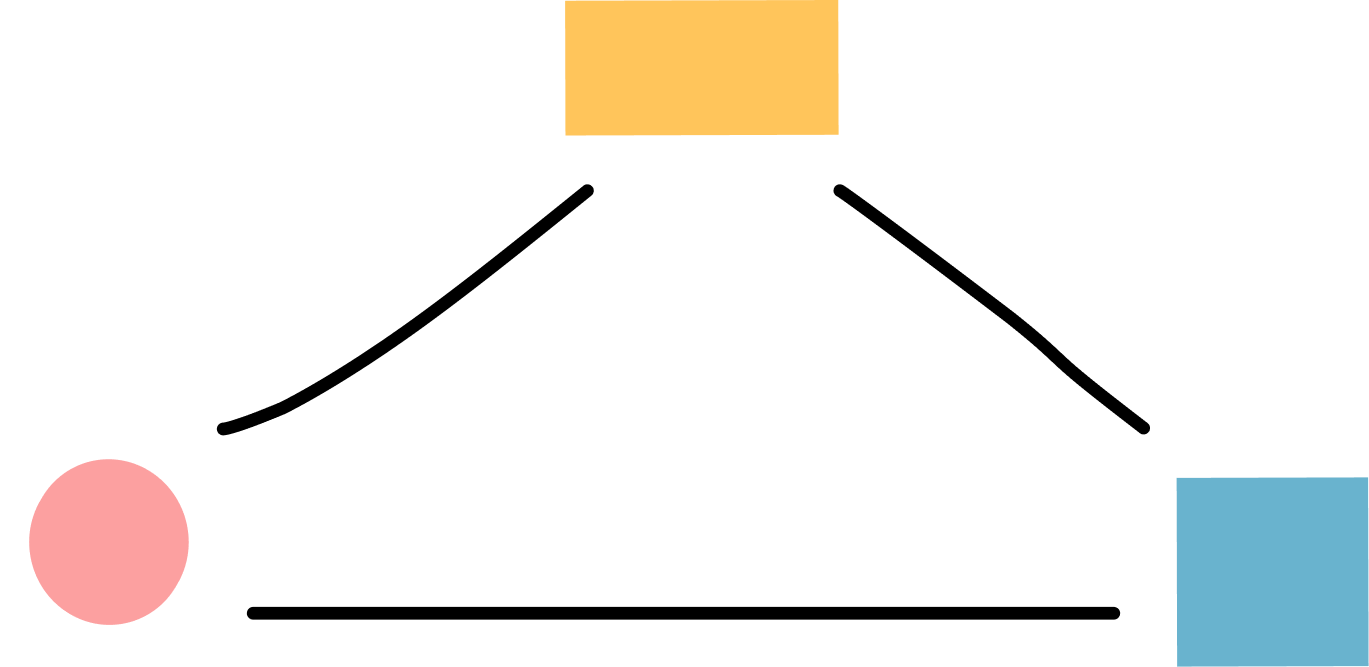
Triangulation uses multiple forms of diverse evidence to increase confidence in a conclusion. The variation can be in what data we gather, where it comes from, how we analyze it, and who analyzes it. I also use triangulation in the inverse: stress testing conclusions by questioning what we would see if it's true.
For example, if this website gets a lot of traffic, I could conclude I did a good job. But if that's true, I'd expect visitors to send DMs or emails. If I see traffic but no messages, maybe it was just a bot influx instead.
Cognitive Biases
Order Effects
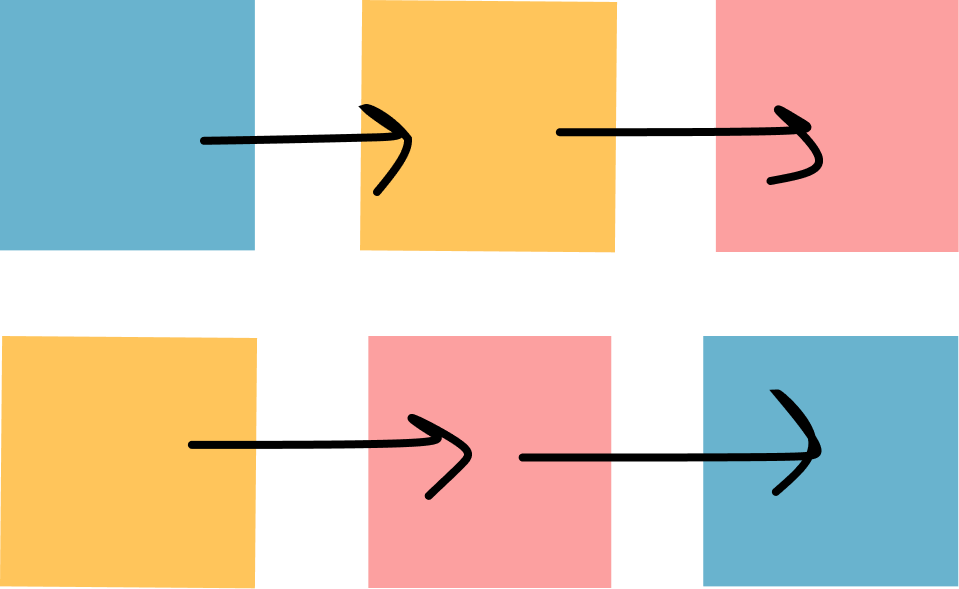
The order in which we experience events influences our perception.
For example, the order which you view the pages of my cube impacts how you perceive me :)
The Pygmalion Effect

We are more likely to improve when there are high expectations of us.
I practice this by believing in myself, believing in others, and surrounding myself with people who believe in me.
IKEA Effect

We place greater value in things we helped create.
I'm drawn to emergence, multiplayer experiences, and interactivity as expressions of this.
Information Foraging Theory

Information Foraging Theory
In early hunter-gatherer societies, humans decided which bushes to forage by comparing how many berries they could gather to how much energy it would take.
Information Foraging Theory proposes that we show similar foraging behaviour when hunting for answers to our questions, new movies to watch, and problems to solve.
We judge value by whether the perceived outcome (berries) is greater than the perceived cost (thorns). Value perception can be increased by improving the outcome or reducing the cost. We can also measure value perception by observing how people navigate.
I've used Information Foraging Theory in designing search and marketplace products, leading change management for new internal processes, and building my internal compass for which problems are valuable to spend my energy on.
Discernability

Discernability
Simple similarity amplifies difference, while complex similarity obscures it. To improve discriminability, either simplify similar features, remove similar features or add distinct features.
At an attention-to-detail level, discriminability has helped me improve the design of icons and activity status within navigation for complex systems. At a more macroscopic scale, it's why I strive to build diverse communities built on complex similarities, like shared values and rituals.
Emergence Through Play
A learning technique based in first-principles discovery and creative improvisation.





Most of my songwriting starts with a chord progression (building blocks), and I improvise melodies and record. Then I listen back and pull out riffs and phrases that stick out, and begin constructing a song around that basis. I've done similar in design and photography.